Occupational Therapy for Children in Kuwait
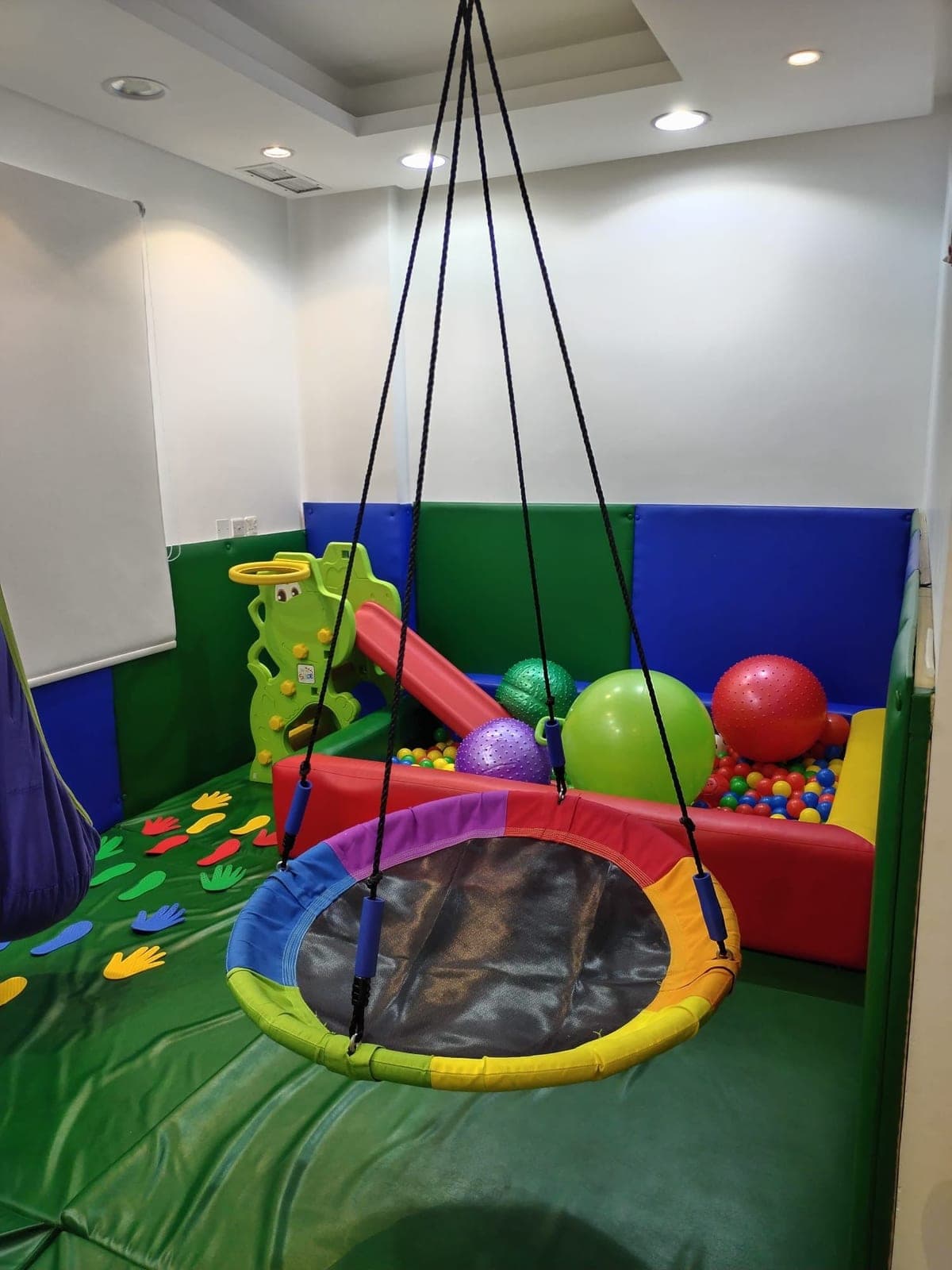
Occupational therapy and sensory integration are among the core strengths of Little Faris Center in Salmiya, welcoming children from across Kuwait and following internationally recognized rehabilitation programs. We develop fine motor skills such as pencil grip and using scissors, and gross motor skills such as balance, jumping and coordination — alongside specialized sensory-integration sessions for children who are over- or under-sensitive to sounds, textures and movement. Our biggest goal is your child’s independence: eating, dressing and organizing their things on their own. With consistent sessions, parents usually notice progress building week by week, in a safe play environment children love, with daily follow-up after every session.
Who is this service for?
You may notice one or more of these signs in your child — spotting them early is a smart step, not a reason to worry:
- Difficulty holding a pencil or using a spoon and scissors
- Unsteady balance or frequent stumbling during movement and play
- Strong discomfort with sounds, textures or certain foods
- Relying heavily on parents for dressing and eating compared to their age
- Avoiding physical games their peers enjoy
Supporting children on the autism spectrum
Occupational therapy and sensory integration are a cornerstone of supporting children on the autism spectrum: they help children regulate their sensory responses and engage in play and learning more calmly. We follow internationally recognized rehabilitation programs, and with consistent sessions parents usually notice their child’s focus and daily independence improving over time.
How do sessions work at Little Faris Center?
- An assessment session where we get to know your child and their skills precisely
- An individual plan with clear goals, discussed with you transparently
- Regular sessions built on play and activities children love
- Detailed daily follow-up reaching parents after every session
Age Range
From 18 months to 15 years
The center is equipped with security cameras in every room, for the general safety of the children.
Frequently Asked Questions
What is the difference between occupational therapy and physiotherapy for children?
Physiotherapy usually focuses on the body’s core movement abilities such as muscle strength and walking, while occupational therapy focuses on putting those abilities to work in daily-life tasks: writing, dressing, eating, playing and participating in class. Our sessions target fine and gross motor skills and sensory integration in the service of your child’s real-day independence.
What is sensory integration and why does it matter for my child?
Sensory integration is the brain’s ability to organize information coming from the senses — touch, movement, balance and hearing — and respond appropriately. When a child struggles with this, they may be bothered by ordinary sounds, refuse certain food textures, or constantly seek movement. Our sessions support this organization through carefully designed, enjoyable activities.
How do I know my child needs occupational therapy?
If your child clearly struggles with skills their peers manage — like pencil grip, dressing or balance — or reacts strongly to everyday sensory input, the right step is an assessment by an occupational therapist. The assessment determines precisely whether your child actually needs sessions and which goals we would start with.